

The 6 Principles of RA
Requisite Agility is realized through the application of six actionable principles that apply across all sectors. When these six principles work in concert, organizations become capable of regeneration – agile enough to adapt, grounded enough to endure.
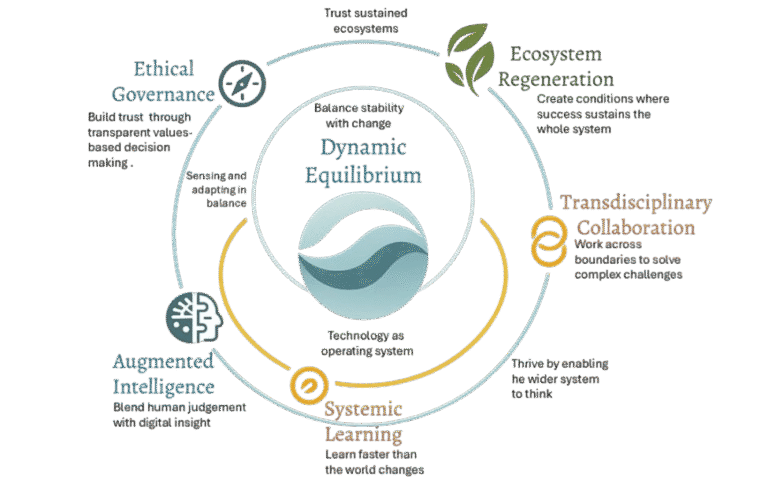
RA Principle #1. Dynamic Equilibrium
The ability to balance stability and change.
Organizations that ensure both efficiency and innovation. Dynamic Equilibrium is about maintaining enough structure and consistency to execute flawlessly while ensuring necessary adaptability and flexibility to succeed.
Why this matters:
RA Principle #2. Ecosystem Regeneration
Create conditions where success sustains the whole system.
No organization operates in isolation. Ecosystem Regeneration is about investing in suppliers, partners, communities and the environment to create shared long-term value.
Why this matters:
RA Principle #3. Transdisciplinary Collaboration
Work across functional, divisional and industry boundaries to solve complex challenges.
Transdisciplinary Collaboration brings together diverse expertise to design integrated solutions to drive innovation.
Why this matters:
RA Principle #4. Ethical Governance
Build trust through transparent, values-based decision-making.
Ethical Governance is the foundation of credible leadership and sustainable growth. It goes beyond compliance to ensure decisions align long-term purpose with short-term gains.
Why this matters:
RA Principle #5. Augmented Intelligence
Blend human judgment with digital and AI insights.
AI and data analytics are powerful, but only when guided by human wisdom and ethical context. Augmented Intelligence ensures technology enhances and builds on rather than replace, human creativity and judgment.
Why this matters:
RA Principle #6. Systemic Learning
Turn shared experiences, mistakes and successes into an organizational capability.
In fast-changing markets, learning is the ultimate competitive advantage. Systemic Learning builds feedback loops across teams and timeframes so insights become embedded in culture and processes.
Why this matters:
The Principles of Requisite Agility is licensed by the Requisite Agility Inc under a Creative Commons Attribution-ShareAlike 4.0 International License.
How the RA Principles Work Together
These six principles are interdependent levers that multiply agility and performance.
For example:
Organizations that design and work through these six principles that we call Requisite Agility are able to grow, adapt, and regenerate without losing direction or integrity.