
Personal Requisite Agility: six principles for holding the line in chaos
We don’t get out of the woods by walking faster. That’s the uncomfortable truth in Venkatesh Rao’s ‘Out of the Woods’ map — the one many of us clung to during COVID.
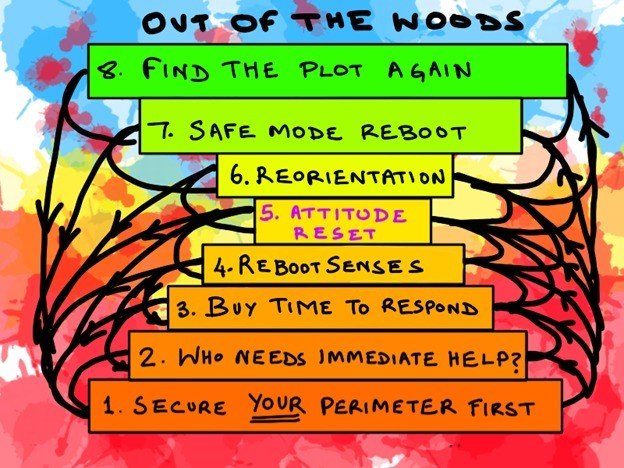
It reminded us that complexity isn’t a detour to be avoided, but a terrain we have to learn to live in. Jennifer Garvey Berger mapped similar ground in her ‘six mindtraps’ — the mental loops that keep us clinging to certainty, agreement, control, and simple stories when the world is asking for something else entirely.
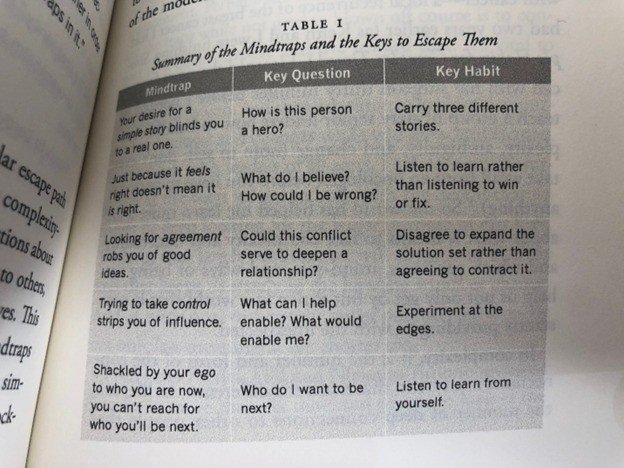
Requisite Agility is about developing that ‘something else’. It’s not a technique or a framework; it’s a way of being that lets us act wisely when the map dissolves. These six principles are a personal compass for that work — ways of holding the line when the forest closes in and no single path is clear.
*Hold the edge*
Take a breath and stay where order meets chaos. Don’t flinch. Growth lives in the tension between fear and potential. Walk the line.
This is the discipline of not retreating to the false safety of control. It’s the difference between trying to tidy up uncertainty and learning to breathe inside it. In practice, it means staying with discomfort long enough for it to become information.
*Tend the soil*
Don’t extract. Regenerate. Relationships, systems, and especially yourself — leave them stronger than you found them.
Efficiency has its limits. Regeneration begins when you stop trying to win the moment and start investing in the conditions that make thriving possible. It’s a choice to cultivate depth over speed, reciprocity over transaction.
*Cross the lines*
Don’t sit in silos or seek comfort in tribalism. Think across, feel through, make common cause. Learn from other languages and ways of seeing.
Complexity is multilingual. Every discipline, community, and identity carries its own grammar of sense-making. Crossing lines means being porous to those grammars — letting them rewrite the way you see, not just add to what you know.
*Do the right thing*
Act with integrity, not for the optics. Be just, honest, accountable — especially when no one is watching. There’s an option not to comply in advance.
This is the hard edge of leadership: recognising that in complex systems, ethics isn’t a rulebook but a practice of care. When metrics blur, right action depends on staying human, even when that costs.
*Stay human, work with machines*
Use tools, don’t become one. Marry tech with wisdom. Don’t let ease replace discernment.
AI can automate competence, but not conscience. Staying human means designing technology that amplifies our moral and imaginative capacities rather than replacing them. The aim isn’t to keep up with machines, but to evolve alongside them without losing our soul.
*Learn as if life depends on it*
Because it does. See systems. Adapt. Teach others. Keep the loop open. Make sense, together.
In complexity, learning isn’t a side activity; it’s survival. The system learns through us. Every reflection, feedback loop, and conversation is part of its evolution. To learn together is to become part of the world’s self-correcting process.
These six principles aren’t abstract ideals — they’re muscles. Requisite Agility is a living discipline, not a mindset poster. It asks us to develop the same capacities that organisations need if they are to thrive in volatility: balance, regeneration, crossing boundaries, ethics, human–machine harmony, and systemic learning.
If Rao’s map showed the contours of the forest and Berger’s mindtraps showed why we get lost, these six principles are the practices that keep us moving — not out of the woods, but through them, awake.
How do you hold your edge without falling back into control? Where do you tend the soil rather than just harvest the field?